Fuel System
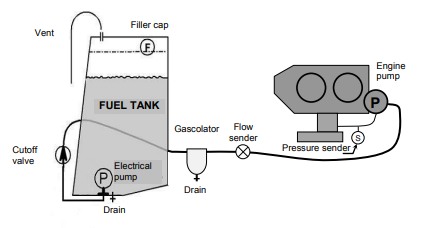
Stores fuel, filters it, and delivers it to the engine. Helicopter fuel systems are simpler than fixed-wing systems (no tank-to-tank crossfeeds, no boost-pump-as-redundancy in most light helicopters), but the consequences of fuel exhaustion are immediate and unforgiving. Most helicopter fuel exhaustion accidents trace to one of three causes: misjudged endurance, gauge inaccuracy, or water contamination.
Fuel grade — never mix
Most helicopter engines run on one of two fuel grades:
- 100LL Avgas — for piston engines (R22, R44, Cabri G2, Schweizer 300). Blue-tinted. Contains tetraethyl lead. Typically 100 octane.
- Jet-A — for turbine engines (Bell 206, H125, Bell 407). Clear-to-amber. Kerosene-based. Higher flash point, lower vapor pressure.
Putting Jet-A in a piston engine is a fatal mistake — the engine will run for a few minutes on residual avgas, then quit and fail to restart. Putting avgas in a turbine engine is also problematic but typically less immediately catastrophic.
Most helicopter fuel filler ports are clearly marked. Fuel trucks at airports are color-coded (blue for avgas, black for Jet-A). At an unfamiliar fuel point: verify the placard, verify the truck color, verify the receipt. Never assume.
Sumping — the every-flight habit
Drain the fuel sumps at every fuel drain point on every preflight. You're checking for:
- Water — clear, sinks below fuel. Result of condensation in the tank or contaminated fuel from the supplier.
- Sediment — particulate matter. Filter elements catching contamination.
- Wrong fuel — Jet-A in an avgas system looks slightly different from avgas. If it's clear when it should be blue, stop.
Drain at least a tablespoon, ideally more, until the fuel runs clear and a single color. If you see water, drain again until water is gone or the tank is empty (whichever comes first). Persistent water means the tank has been contaminated and the helicopter shouldn't fly until it's been drained completely.
Gauge accuracy — visual check matters
Helicopter fuel gauges are reasonably accurate but not always trustworthy at the extremes (very low fuel) or in unusual attitudes. Best practice:
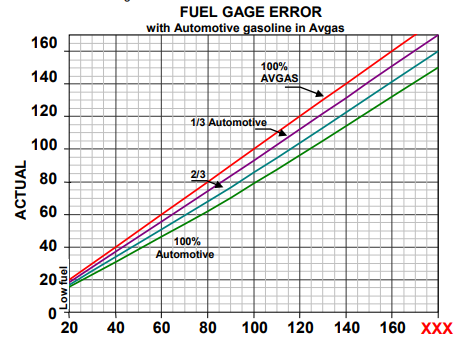
- Visually verify fuel quantity at preflight using a dipstick, sight gauge, or visual inspection of fuel level. Don't rely solely on the cockpit gauge.
- Cross-check against fuel slip from the last fueling.
- Compute expected burn rate × planned flight time. If gauge readings during flight don't match the math, treat the gauge as suspect.
- Land with reserves intact — the gauge approaching zero is not the same as fuel exhaustion, but it's not a margin you should explore.
FAR fuel reserves
14 CFR 91.151 fuel reserves for VFR helicopter operations:
- Day VFR — sufficient fuel to fly to first point of intended landing and thereafter for at least 20 minutes at normal cruise.
- Night VFR — same but at least 30 minutes reserve at normal cruise.
14 CFR 91.167 IFR reserves (helicopter): same rules as day VFR plus alternate, at least 30 minutes reserve at normal cruise. Note this is shorter than the fixed-wing 45-minute IFR reserve — helicopters get a discount.
These are minimums. Operational practice typically adds margin: 30-45 minutes total reserve for VFR ops, more for cross-country or marginal weather.
What can go wrong
- Fuel exhaustion — engine quits. Autorotate to landing.
- Fuel contamination (water) — engine surges, runs rough, may quit. Land as soon as practical.
- Fuel leak — visible fuel staining, smell, or rapid quantity drop. Land immediately.
- Wrong fuel — found at preflight: don't fly. Found in flight: prepare for engine failure.
- Vapor lock (fuel-injected piston) — hot fuel boils in the lines, engine sputters. Specific to hot-start scenarios.